
Emergency Lighting Testing & Certification — BS 5266 Compliant, Certificates Issued.
The lights that have to work when the power goes off
Emergency lighting has one job: illuminate your escape routes when the mains fails. Not most of the time. Every time. Which is why BS 5266 requires it to be tested monthly, and why the annual duration test exists — because a luminaire that illuminates briefly during a function test but has a dying battery will fail at the three-hour mark during a real emergency.
Barrow Electrical tests and certifies emergency lighting systems for commercial and industrial buildings across the UK. NICEIC-approved. Monthly function tests, annual duration tests, a maintained log for every visit and full BS 5266 certificates at the end of each year. Where luminaires fail, we carry out the repairs and retest before the certificate is issued.
Emergency lighting testing is part of our Planned maintenance services or book as a standalone service.
Who is responsible — and what happens if they get it wrong
The Regulatory Reform (Fire Safety) Order 2005 places the duty on the Responsible Person — typically the employer, building owner or facilities manager. The obligation is not just to have emergency lighting, but to maintain it in efficient working order and test it at the intervals specified in BS 5266. The Health and Safety at Work Act 1974 reinforces this through the duty to provide safe escape routes.
The Responsible Person can delegate the practical testing to a contractor. The legal obligation stays with them. Where a fire or emergency occurs and emergency lighting is found to have been inadequately maintained, the consequences are personal — not just regulatory. That’s not an abstract risk. Several prosecutions have followed emergency lighting failures in the last five years.
Most commercial property insurers also require evidence of a maintained emergency lighting system as a condition of cover. An annual BS 5266 certificate and maintained test log is the standard documentation they need.
What BS 5266 actually requires
Monthly
Function test: press the test key and confirm every luminaire illuminates
Annual
Duration test: batteries discharged for full rated period — 1 or 3 hours
3-yearly
Thorough inspection: wiring, coverage adequacy, luminaire siting
Ongoing
Log book updated after every test, available for inspection at any time
Why the monthly test isn’t enough on its own
What ‘maintained’ and ‘non-maintained’ means for your test
What we provide
Monthly function testing
Every luminaire on your site tested, every result recorded in the maintained log. Failed luminaires identified immediately. We do this on a schedule — you don’t need to chase us or remember the date.
Annual duration test and BS 5266 certificate
Full duration test of every luminaire. We check each fitting at the start, partway through and at the end. The BS 5266 Emergency Lighting Certificate is issued when the system passes. Where luminaires fail, we carry out replacements before the certificate is issued.
Maintained log book
The log book is the paper trail that demonstrates compliance to fire inspectors, insurers and auditors. We provide and maintain it as part of the service, with every test, result and remedial action recorded in the required format.
Remedial works
Battery replacement, LED source replacement, wiring faults, driver failures — all within our scope. We don’t tell you a luminaire has failed and leave you to find someone to fix it.
New emergency lighting installation
Where coverage is inadequate or an existing system is beyond repair, we design and install a new BS 5266 compliant system. We start with an emergency lighting design that confirms coverage across all escape routes before specifying any luminaires.
Who needs this service most
- Care homes and medical facilities — life safety critical in occupied buildings. See our care & medical sector page for context.
- Schools and education buildings — BS 5266 coverage across all escape routes, works planned around term time
- Warehouses and logistics — large floorplates, high-bay environments, multiple exit routes
- Retail and hospitality — high footfall environments where failure has immediate public safety implications
- FM providers managing multiple properties — we coordinate testing across your estate. See our facilities and multi-site support for how we work as a supply chain partner.
How the contract works
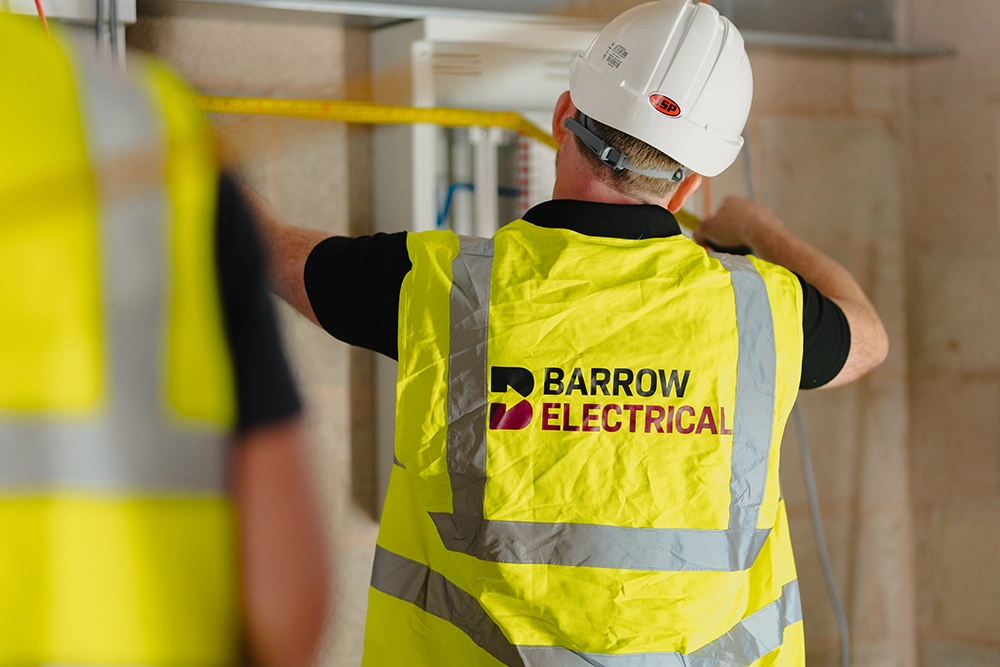
We start with a brief call or site visit to understand your building, the tests you currently have in place and any upcoming compliance dates. We then put together a package specification and price. Once agreed, we manage everything from there: scheduling, attendance, documentation, remedial work recommendations. You get a notification before every visit and the certificate or record within a few days of it.
If you have an existing contractor and want to switch: we carry out an initial audit to confirm the current status of all your certificates before we take over. If we find any gaps, we flag them before the contract starts rather than after.
Compliance packages sit alongside our planned preventive maintenance services — many clients combine both under one programme.
Frequently asked questions
How often does emergency lighting need testing?
Yes — and we’d encourage it. Monthly function tests and an annual duration test are required by BS 5266. The function test confirms each luminaire illuminates; the duration test confirms the batteries have sufficient capacity for the full rated period. The three-yearly thorough inspection covers wiring condition and coverage adequacy. All tests must be recorded in the maintained log.
What’s the difference between a function test and a duration test?
A function test (monthly) briefly simulates a mains failure and confirms each luminaire comes on. It takes a few minutes per fitting. A duration test (annual) runs the system on battery power for the full rated period — one or three hours — to confirm the batteries can sustain illumination for the time required. The function test tells you the lamp works. The duration test tells you the battery does too.
What happens if a luminaire fails?
Failed luminaires are identified, reported and repaired before the BS 5266 certificate is issued. Usually the battery has reached end of life. We carry out the replacement and retest as part of the same contract. You won’t receive a certificate saying your system is satisfactory when it isn’t.
Do you provide the log book?
Yes. We provide and maintain the emergency lighting log book as part of the service. Every test, every result and every remedial action is recorded in the format required by BS 5266. The log is yours to keep and present to inspectors or insurers..
How long does the annual test take?
The duration test itself requires one or three hours of testing time, plus inspection at the start and end. Most commercial buildings can be completed in a half or full day. We can schedule out-of-hours where operational requirements demand it.
Can you cover emergency lighting across multiple sites?
Yes. We manage testing programmes for FM providers, property managers and multi-site operators. Coordinated scheduling, consistent documentation and annual portfolio summaries.
Get a quote
Emergency lighting testing is often combined with other compliance services. Take a look at our compliance testing packages if you want EICR, PAT and emergency lighting under one contract.